

08 Jan 2026 China’s Stranglehold on Rare Earths Illustrate how It Is an Existential Threat to the US and the OECD
Written by Jeffrey Cartwright, Managing Partner
China recently announced restrictions on rare earth exports. In doing so, it showed its ability to inflict major harm on the United States and other economies. While it relaxed its initial actions after pressure, it clearly demonstrates that it can virtually shut down all automobile and most defense manufacturing factories.
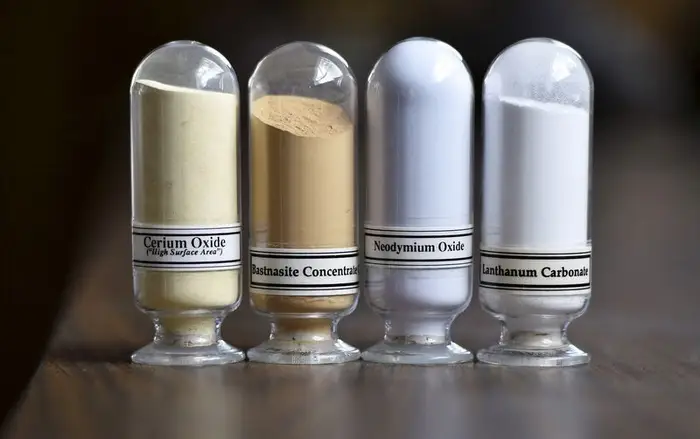
China produces approximately 92% of refining capacity for rare earths and 98% of all magnet production. Rare earths are strategic materials that are critical to the manufacturing of electric vehicle motors, secondary batteries, semiconductors, wind power turbines, missile systems, and more. They are a core material for manufacturing permanent magnets which are essential in military equipment and in automobiles. 15 years ago, in a dispute with Japan, China cut exports of these materials and Japan’s production lines nearly ground to a halt.
On October 9, 2025, China announced restrictions on shipments of rare earths to the United States and European countries. Under pressure of a massive increase in tariffs on Chinese imports to the US, China relaxed those restrictions and instituted a regimented licensing process. While that brings about a temporary truce in the trade war, it clearly demonstrated that China is willing and able to seize control of the global economy when it so chooses.
China Demonstrated that It Remains an Existential Threat
President Xi views Western culture as on the decline and China as becoming the global economic and military superpower of the near future. The ongoing trade war was initiated by China, as evidenced by Chinese tariffs on American products being currently higher than US tariffs on Chinese products, which has been the case for decades. China protectionism through tariffs and non-tariff trade policies have allowed it to shelter its economy from foreign competition while building significant export capacity which has destroyed industries in other countries. Rare earths are one of those areas. Government subsidies and disregard for the environment facilitated the building of the dominant position globally for rare earths.
China’s Trade War Gamble Failed
With the United States threatening a massive increase in tariffs, China has retreated for the time being. The United States is being joined by other nations who now view China as an existential threat to their manufacturing industries. Germany and France are considering significant tariff regimes to protect their economies. Mexico is implementing a 50% tariff on Chinese imports.
The West’s Response to Protect Itself from a Repeat of the Chinese Cutting-Off Supplies
As China limits exports, the West, along with its allies including Japan and others, are responding with additional mines, rare earth separation facilities, and refining capacity. While this may take several years, the reliance on China will end.
While the West lacks current capacity, it is not insurmountable. It is important to look at the reasons why these industries, which previously existed, no longer exist.
First, pricing and second, environmental concerns. China has been predatory with pricing and until recently dismissed environmental damage. The West, on the other hand, has been overly restrictive on the environment when dealing with strategically important industries. Second, in a free-market economy, the West left it to individual firms to maximize their profits by buying based upon the lowest price.
Solving these two issues is not difficult. Speeding the permitting process instead of adopting bans on production would solve the one issue. The government setting a guaranteed price for rare earth would solve the other issue. The second does not create a huge economic burden. The entire global industry for rare earth is miniscule. It is less than $10 billion annually! Doubling the price to guarantee profits to miners and processing plants is a small price to pay to deprive China of its strangle-hold on these strategic materials.
United States’ Prior Response when Threatened
There are many sceptics out there. For those who might think that the United States will not rise to the challenge, they should consider the massive response to Pearl Harbor (or more recently following the 9-11 terrorists’ attacks). Just a few thoughts:
- “America is the only country that is constantly being reborn” William S Knudsen (Danish immigrant who became chairman of General Motors in 1937 and led many of the manufacturing efforts that built America’s military capabilities in World War II).
- America was the least mobilized country before World War II with its manufacturing base having been devastated by the Great Depression, high taxes, and increasing labor union power. Its military was the 17th largest in the world.
- In 1941 the United States produced 550 aircrafts per month. By 1942, that was 170 per day, or a total of 324,750 aircrafts.
- At the outbreak of World War II, America had 18 aircraft carriers, at the end it had 141.
- The US produced 88,410 tanks, 257,000 artillery pieces, 2.6 million machine guns, etc.
- President Roosevelt called on the US to shutdown the production of durable consumer goods; by the end of the war it had doubled.
- In 1990, the 4th largest military in the world was destroyed in 4 days. Russian T-72 tanks were no match for the Abrams tank fielded by the US and the battle-tested Iraqi army collapsed in less than 100 hours.
In short, when its existence has been threatened, the United States has an immense capability to respond. China has gone too far and as Admiral Yamamoto (the architect of the attack on Pearl Harbor) said “I fear all we have done is to awaken a sleeping giant.” In 4 years, Japan had been devastated and had not a single armed ship afloat, virtually no aircraft, and its entire merchant shipping fleet at the bottom of the Pacific Ocean.The threat of stopping rare earth shipments is one of those moments where China has overreached.
Other Strategic Vulnerabilities that China Might Exploit
During the COVID pandemic, China cancelled exports of personal protective products such as masks, hospital gowns, and ventilators. Another case of China acting to the direct detriment of other countries.
Risks remain in other areas where the United States (and its allies) cannot permanently yield power to China.
One of these is pharmaceutical manufacturing. Tariff threats have resulted in a large number of investments in pharmaceutical factories; however, these are not sufficient to break the current clout of China for active pharmaceutical ingredients.
Another risk area is lithium-ion batteries. The automobile industry has developed these batteries for electric vehicles. The risk area is not in large vehicle batteries, it is in the everyday batteries that power consumer goods from hand-held drills, to vacuum cleaners, to toothbrushes, to mobile phones, and other consumer products. While this is a risk area, the United States will be inconvenienced but not crippled with a cut-off of these products.
Shoreview Management Advisors’ Value Proposition
Nearshoring provides a logical alternative to China in many industries and Shoreview assists its client companies in diversifying from China. In the industries highlighted above, there is no Nearshoring alternative today. These strategic risk areas are best addressed by on-shoring or ally-shoring, which Shoreview also advises on.
The advent of high levels of tariffs on China, Southeast Asia, and elsewhere mandate a strategic review of not only costs, but of what alternative supply chains bring to the table in terms of reducing risk or increasing profits. Shoreview Management Advisors takes pride in knowing that our efforts have resulted in huge, quantifiable savings for our clients as they leverage the potential new product costs with their incumbent, as well as with other factories in other countries, whether Mexico or China.
Please email or call us for a brainstorming session – before tariffs increase yet again.