

30 Mar 2026 Disruptions to Trade and the Global Economy Due to Iran Conflict – Tea Leaves of Impact of China vs. Taiwan
Written by Jeffrey Cartwright, Managing Partner
The Iran Conflict Will Cause Further, Major Disruptions
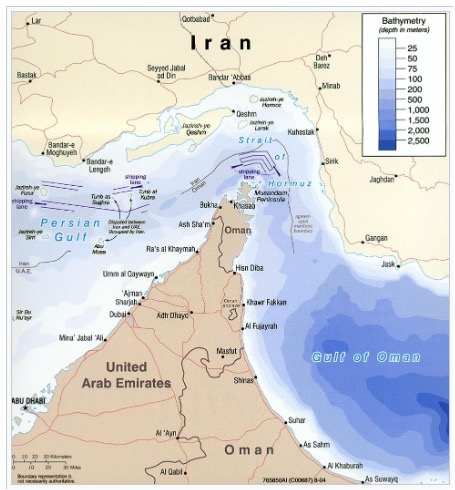
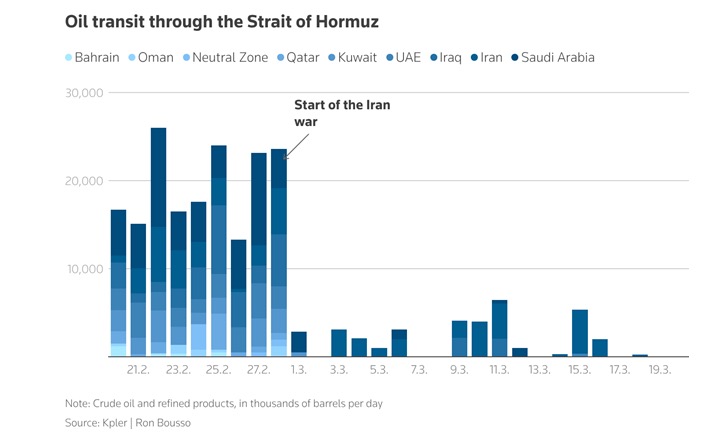
On February 28, 2026, The United States and Israel began striking Iran. Ocean container ship and oil tanker traffic in the Persian Gulf and through the Strait of Hormuz has virtually ceased. The impact of this is increasing price of oil and liquified natural gas (LNG) since 20% of the world’s energy ships from there to the world. Today, 3200 tankers are stranded in the Persian Gulf out of the 8800 tankers in the entire world. There are no major disruptions due to each nation having an inventory reserve detailed in the next paragraph. There is an additional 12 days of global inventory of crude oil in tankers at sea and approximately 10 days more of inventory anchored outside of ports.
Major countries have strategic oil reserves such as Japan with 250 days (99% imported), South Korea with 210 days (99% imported), the United States with 160 days (but produces more than it uses), China with 150 days (70% imported), Western Europe with around 90 days (96% imported) excluding the United Kingdom and Norway which are net exporters, India with 35 days (86% imported), Vietnam with 45 days (57% imported), Thailand with 75 days (80% imported), Indonesia with 24 days (35% imported), Singapore with 30 days (99% imported) , Taiwan with 60 days (91% imported) and Malaysia with 30 days (15% imported).
Many of these countries are already rationing supplies and beginning to implement energy triage as inventories will begin to shrink. Four-day workweeks, switching computers off during breaks, keeping air conditioning at higher temperatures, etc. In a few weeks, energy-intensive industries will begin to curtail manufacturing. These are in addition to major increases in fuel prices.
For countries that have oil production but are unable to load tankers, oil field shutdowns are occurring and will worsen as empty tankers within the Persian Gulf are full.
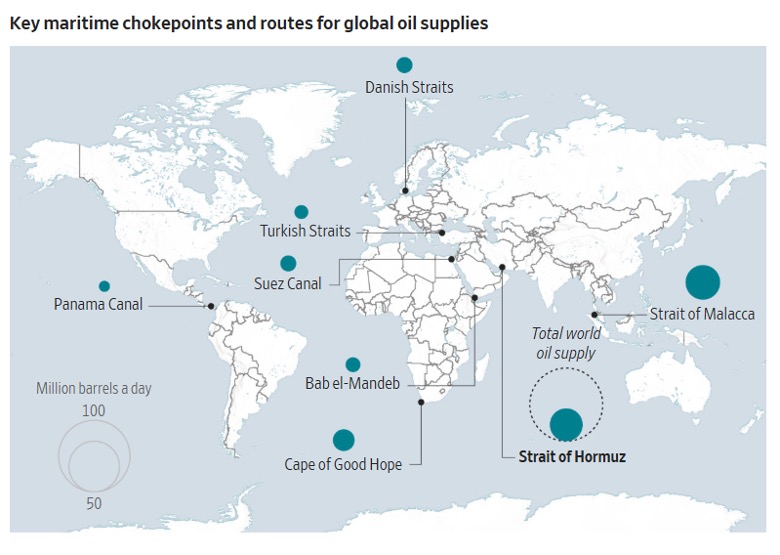
Maritime Bottlenecks Immediate Effect on All Ocean-Going Vessels
When the Strait of Hormuz closed, the effect was nearly instantaneous. When the Houthis began to attack ships in the Red Sea in October 2023, the effect was near immediate.
If China invades Taiwan, the effect will be near immediate as all Pacific trade from China and Taiwan will stop. Since these are predominately container ships and involve multiple ports in multiple countries, the affected countries will include Japan, South Korea, and Southeast Asia. The issues experienced during the Pandemic will be insignificant compared to the disruption in the event of that invasion.
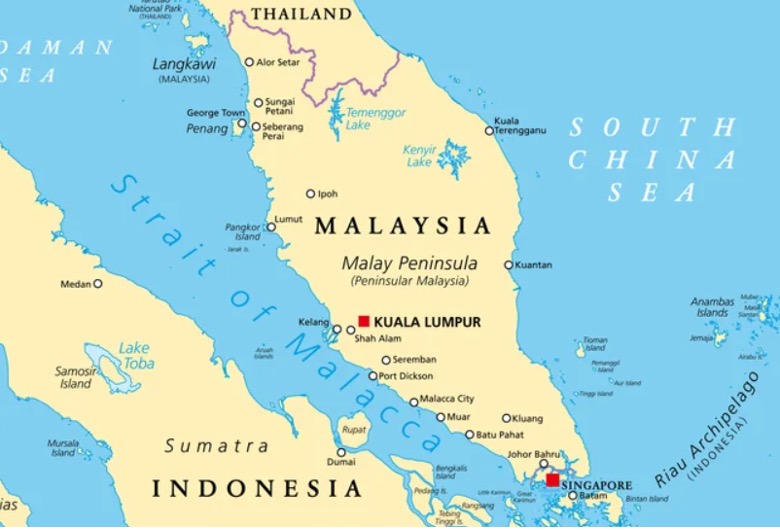
Invasion of Taiwan by China Will Close the Strait of Malacca and the Disruption Will Be Horrendous
This Strait is even easier to block than the Strait of Hormuz. First, it is only 500 miles long, and the shipping lane itself narrows to 1.7 miles. Two-thirds of all China trade ships through this chokepoint and 80% of all its imported oil. A few mines or one submarine will close this strait immediately.
It is President Xi’s stated goal to reunite Taiwan with China peacefully, but, if necessary, by force. He has directed the Peoples Liberation Army to be ready to do so by 2027. The consequences are too great to ignore the threat. The West ignored Russia’s threats towards Ukraine. Iran’s threat of obtaining nuclear weapons (to which it has sufficient fuel for at least 11 bombs as claimed by Iranian negotiators in February 2026).
The time lag for Ukraine to be invaded was very short as was the timeline for attacks on Iran. China will not announce an invasion months in advance.
Achieving a Lower-Landed Cost
The likelihood of achieving a lower landed-cost given tariff increases on China over the last few years is far more likely for many products than it was a year or two ago.
Also, the previous strategy of moving from China to another low-cost country in Southeast Asia has been challenged with the imposition of tariffs on countries like Vietnam and Thailand.
There are two reasons for this:
First, many factories in those countries are Chinese owned and the parent company remains in China. These factories typically import a large number of raw materials and components from China. As such the cost of a product at the factory gate can be 15 to 20% higher than China due to the cost of transporting those materials to the new factory. Prior to the August imposition of tariffs (and subsequent changes to tariff rates), this made sense.
Now with the addition of 20% tariffs on these countries by way of bilateral agreements the economics have worsened. This is also challenged by the announcement of 40% tariffs on transshipped products. These are products that are principally made in China and then lightly touched in other countries such as assembly and packaging only and then claimed to be made in that country. While this has not yet been defined and implemented, USMCA content provisions provide the likely model going forward. Under USMCA, products are assessed a 25% tariff if they are not majority value-added content and thus determined not to be made in Mexico. Also, products like automobiles have an even higher content requirement to avoid tariffs.
It is generally thought that these tariff levels have mostly settled out and although there may be further adjustments, those are along the lines of things not grown in the United States like coffee or other farm products. The second set of adjustments are 232 sectoral tariffs which are global and for a product category that the US wants to have manufactured in the United States. These adjustments are upwards and will not shift comparative country economics
Off-Setting Geopolitical Risk through Nearshoring
The current conflict between Iran and the United States and Israel is clearly demonstrating that events elsewhere seriously disrupt global trade. While it is too early to know how long and how serious the effects will be with the Strait of Hormuz being closed, oil trade is being seriously disrupted, ships are stranded inside the Persian Gulf and many others unable to enter. Short term effects are the increase in the price of oil, including diesel fuel which power container ships transiting from Asia to the United States. Expect major delays and much higher costs until there is a cessation of hostilities and then months for the ocean carriers to sort out their complex systems for loading, unloading, and sailing of vessels at multiple ports around the world.
If China invades Taiwan, this Middle East disruption will seem minor as all trade from China, Taiwan, and Southeast Asia will end suddenly and be of unknown duration.
Companies that have moved their supply chains to southeast Asia are still exposed to the risk of Chinese political disruptions.
In addition to eliminating the risk of Chinese political disruptions, moving to Mexico also virtually eliminates the risk of intellectual property theft or forced technology transfer, as well as lower costs by avoiding tariffs.
However, Nearshoring is now not just an economic decision, it is a business continuity decision.
Proximity to the US Market - 26% of Global GDP
The other major reason, US companies want to Nearshore is proximity to the US market.
The same time zone, flights to Mexico one day and back the next, and 2 to 5 days transportation from Mexico to most anywhere in the US are significant advantages for manufacturing in Mexico. The shortened purchase order to receipt of product timeframe allows adjustments to incoming product flow that is simply impossible with products from Asia. That results in lower inventory, which can positively impact working capital. Also, if the product line is seasonal and due to weather or other factors, demand suddenly increases or decreases, adjustments can be made to better serve customers. This may result in fewer discounts to customers moving end of season inventory or a reduction of obsolescence for products that have been discontinued, and excess inventory is turned into non-saleable goods at other than negative liquidation margins.
Some Asian companies recognize these as benefits and there is heightened interest in those companies manufacturing in Mexico. Some of them of their own volition and some because US companies are demanding that they move manufacturing or lose the business entirely.
Shoreview Management Advisors’ Value Proposition
Shoreview focuses on Nearshoring for US importers and has delivered successful results in the majority of projects. The advent of enduring, high levels of tariffs on China, Southeast Asia, and elsewhere mandate a strategic review of not only costs, but of what alternative supply chains bring to the table in terms of reducing risk or increasing profits. Shoreview Management Advisors takes pride in knowing that our efforts have resulted in huge, quantifiable savings for our clients.